
Jaime Romero Waldhorn, Fuel Efficiency Manager at Wizz Air explains how the airline moved beyond traditional Flight Management System (FMS) profiles by implementing tail-specific Flight Path Optimization (FPO)
The article is published in AircraftIT Magazine
As Wizz Air advanced its fuel-efficiency and environmental-performance initiatives, the airline faced a familiar but important goal: legacy FMS logic, based on generic performance models and limited weather inputs, provided not maximal level of precision needed as it could have been possible for a modern ultra-low-cost, high-frequency operations. With over thousand flights per day and ambitious Net Zero roadmap, Wizz Air needed a solution that could support pilots in real time and compliment decisions-making across climb, cruise, and descent.
To address this, Wizz Air deployed StorkJet’s FlyGuide FPO across the fleet of more than 260 aircraft, providing tail-specific recommendations for optimal speeds and altitudes through the airline’s EFB application. By combining high-resolution weather data, machine-learning-based performance modelling, and cloud-enabled optimization across all flight phases, FlyGuide FPO gives pilots both in-flight guidance and post-flight feedback. The result is better situational awareness, more informed operational decisions, and measurable fuel and CO₂ reduction.
Wizz Air Airline
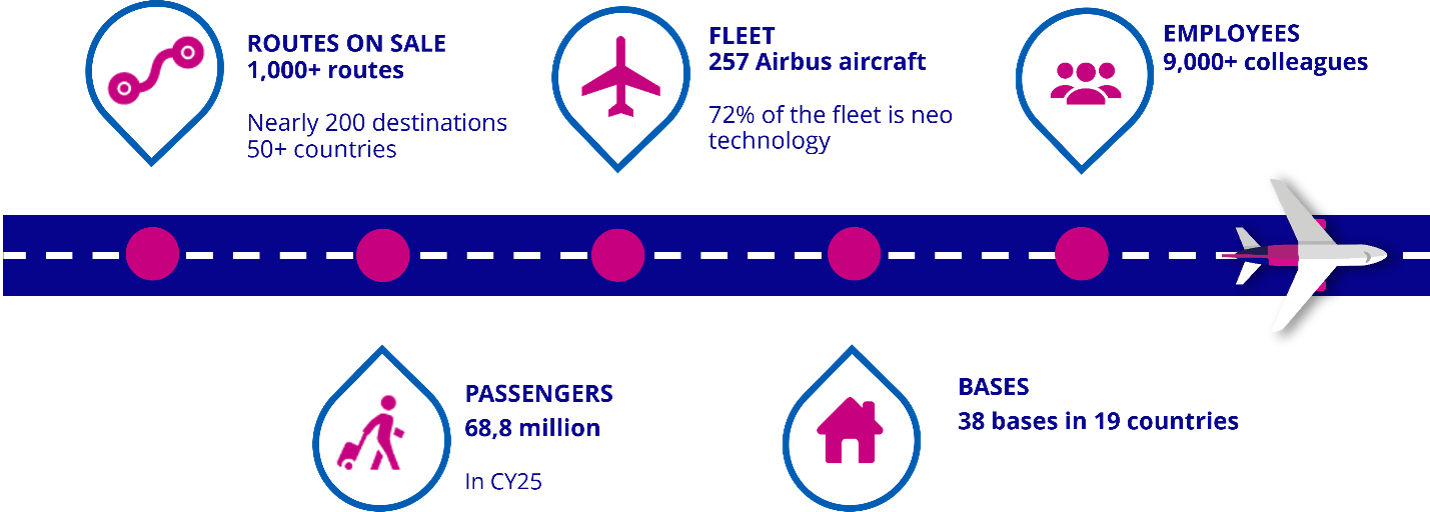
In figure 1 you can see the key facts and numbers about Wizz Air.
Wizz Air x StorkJet Partnership
Since 2019, Wizz Air has been collaborating with StorkJet to enhance operational efficiency and support its environmental sustainability metrics. This partnership focuses on leveraging StorkJet’s advanced tools and technologies – including FuelPro, AdvancedAPM, and FlyGuide – to optimize fuel consumption and improve overall operational performance. The collaboration plays a key role in supporting Wizz Air’s commitment to operational efficiency and environmental performance.
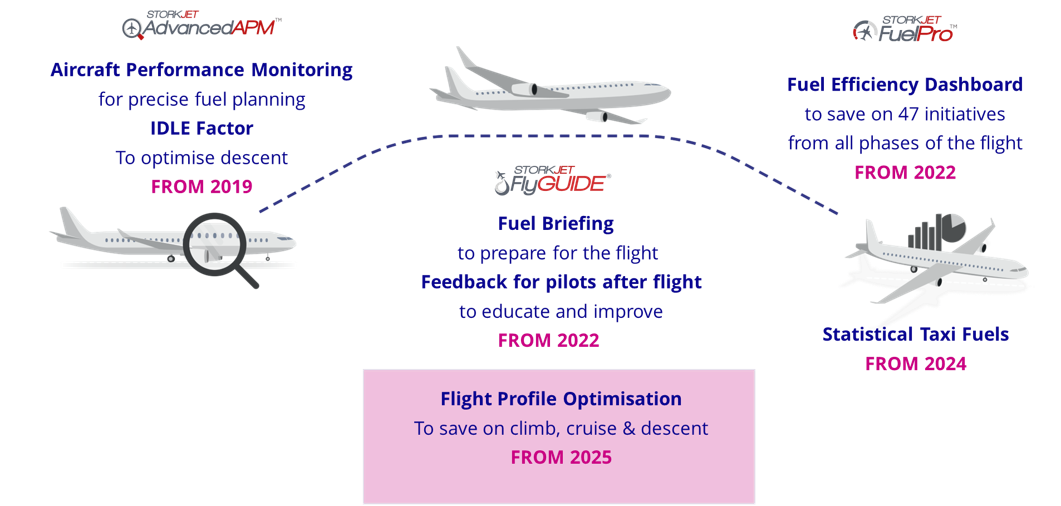
FlyGuide consists of three modules supporting pilots before, during, and after the flight. This case study focuses specifically on the Flight Path Optimization (FPO) module.
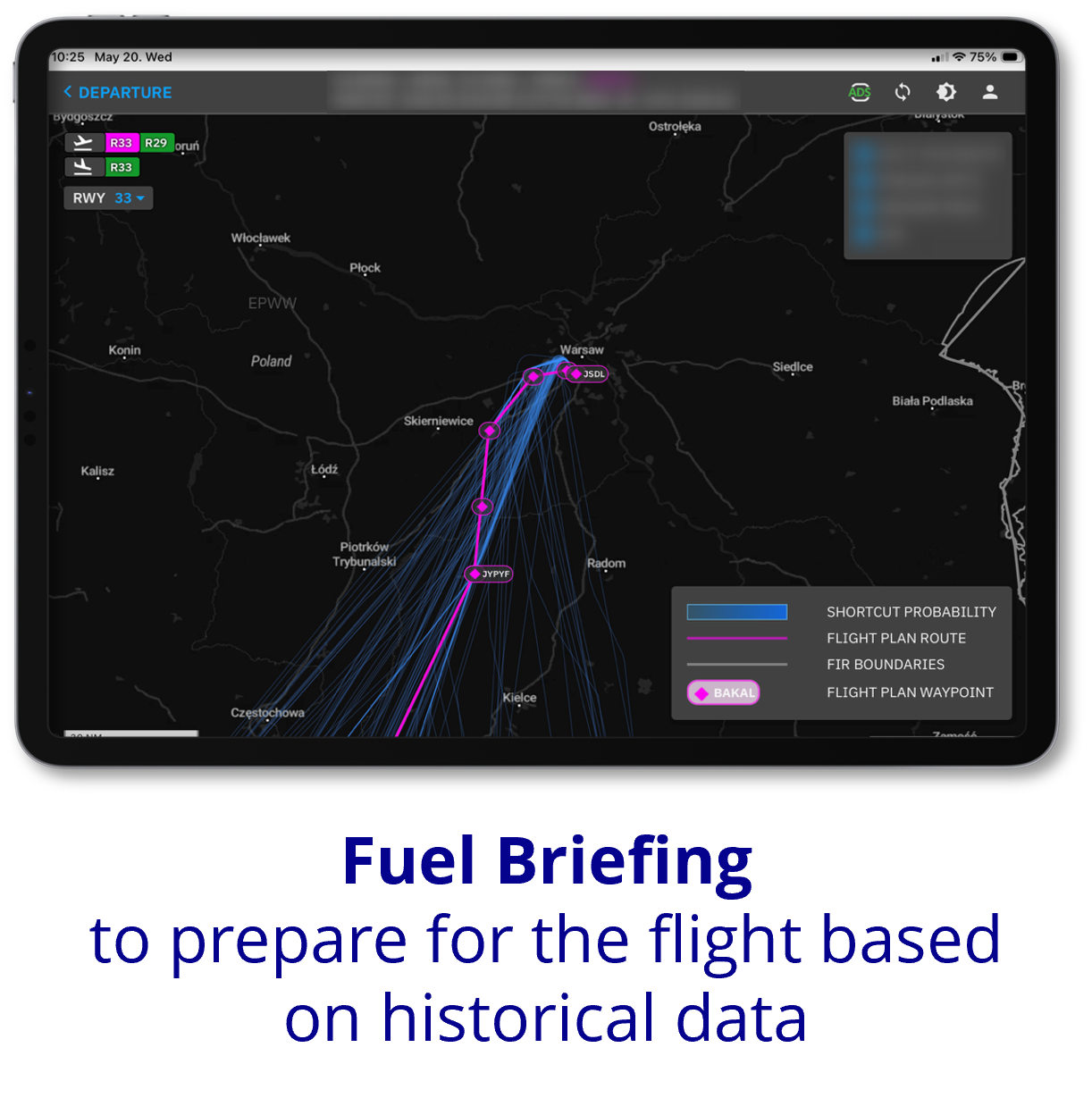
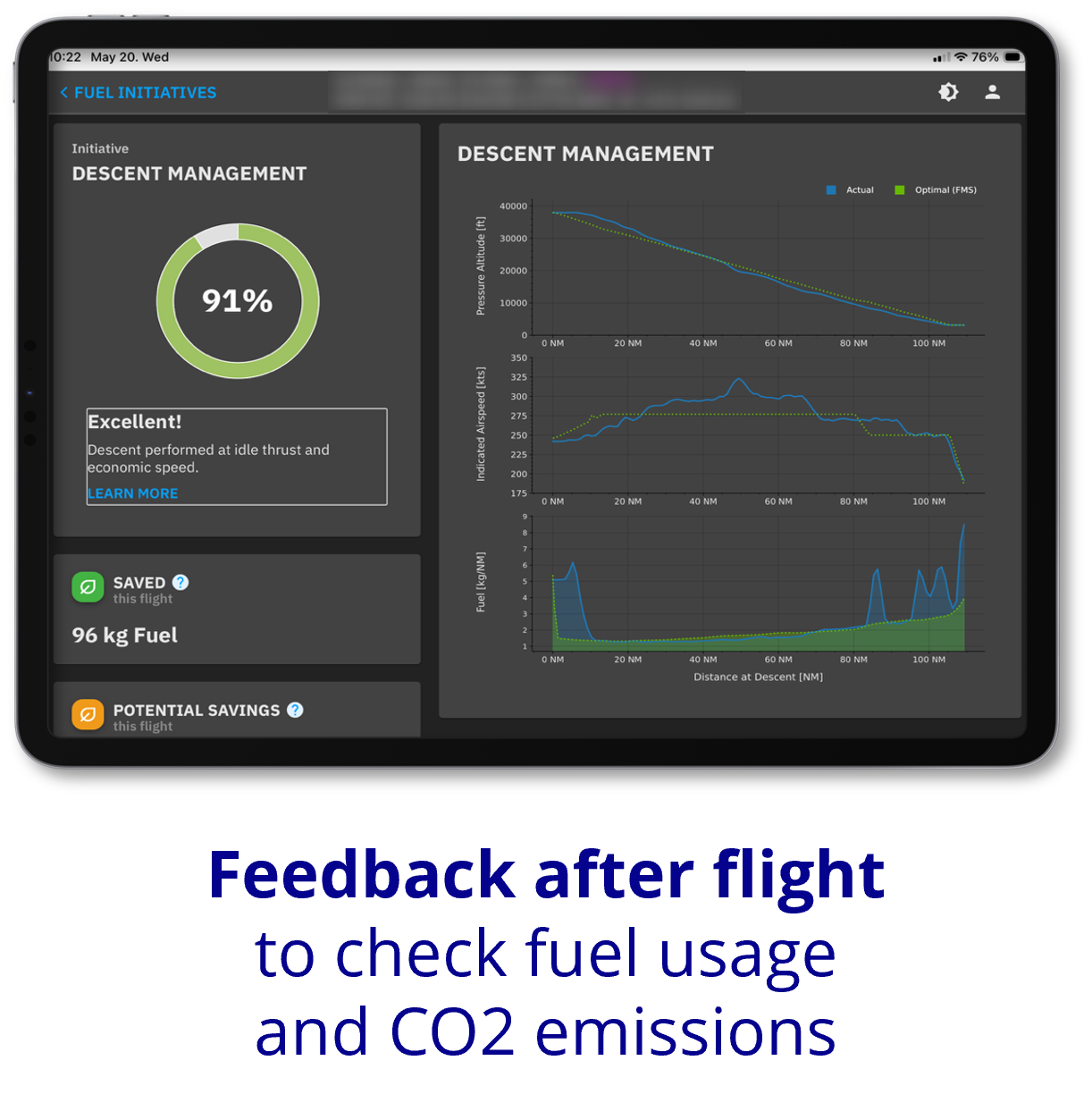
Preflight provides pilots with information before departure, including historical versus planned routes, fuel statistics, recommended departure and arrival configurations, and taxi-in and taxi-out routes based on live airport data.
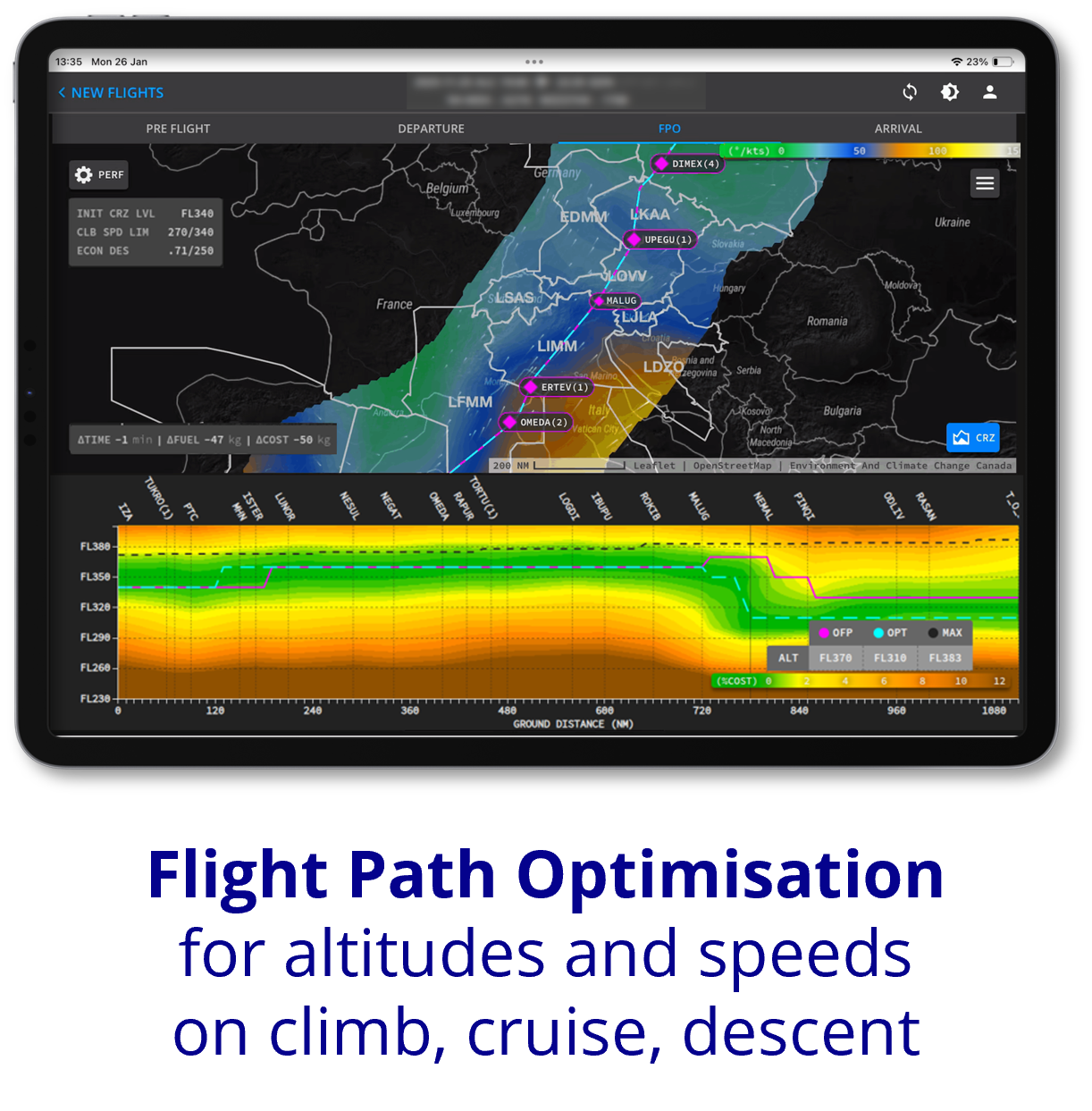
Flight Path Optimization provides optimized speed guidance for all flight phases together with vertical recommendations for the most efficient cruise altitude.
Postflight provides performance feedback after landing, including historical flight records and compliance with fuel-efficiency initiatives.
Operational Performance
In the previous state, Wizz Air, like many other airlines, relied on the FMS calculations, including speeds and altitudes. While it remains a highly capable and essential flight-deck system, it was not designed to perform the kind of dynamic, data-rich, whole-flight optimization that is now possible with machine-trained solutions and higher-resolution weather and performance inputs.
The FMS calculates the route by propagating data from one waypoint to the next, which can limit how fully changing weather conditions and aircraft-specific performance characteristics are reflected in optimization. In addition, the FMS relies on simplified generic performance models. Compared with the richer performance models used in flight planning systems, these represent only a fraction of the aircraft’s actual performance characteristics and require multiple computational approximations. For example, climb and descent speeds are represented through polynomial functions.
The system also offers limited feedback and graphical insight for pilots evaluating alternative scenarios. Identifying the most efficient configuration would require testing multiple values manually within the FMS. In practice, econ climb and descent speeds are calculated independently and then combined with the cruise phase based on the initial cruise level and top of descent, rather than optimizing the flight as one connected profile.
Wizz Air had already achieved very high compliance with optimal FMS speeds and altitudes, exceeding 90%. However, further savings were becoming increasingly difficult to unlock. At that point, the airline identified the need for a more advanced solution that could provide pilots with better speed and altitude targets than legacy FMS logic alone.
Wizz Air therefore implemented FlyGuide FPO, which:
- uses tail-specific performance models, so each aircraft receives its own optimal speed guidance
- uses high-accuracy weather data interpolated over both distance and time
- identifies the true optimum by minimizing Direct Operating Cost (DOC), considering both fuel and time with the cost index as a baseline
- optimizes the entire flight profile holistically rather than treating climb, cruise, and descent independently
- explains the reasoning behind each recommendation, both in flight and after the flight
Tail-specific Flight Path Optimization
To overcome the limitations of generic optimization, FlyGuide FPO identifies the true optimum by running simulations for specific flight conditions across all possible profiles and selecting the configuration with the lowest DOC — see figures 4.1 and 4.2 as example for climb.
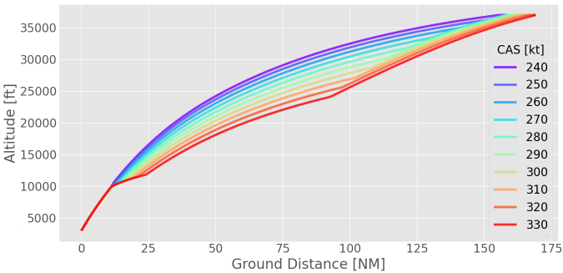
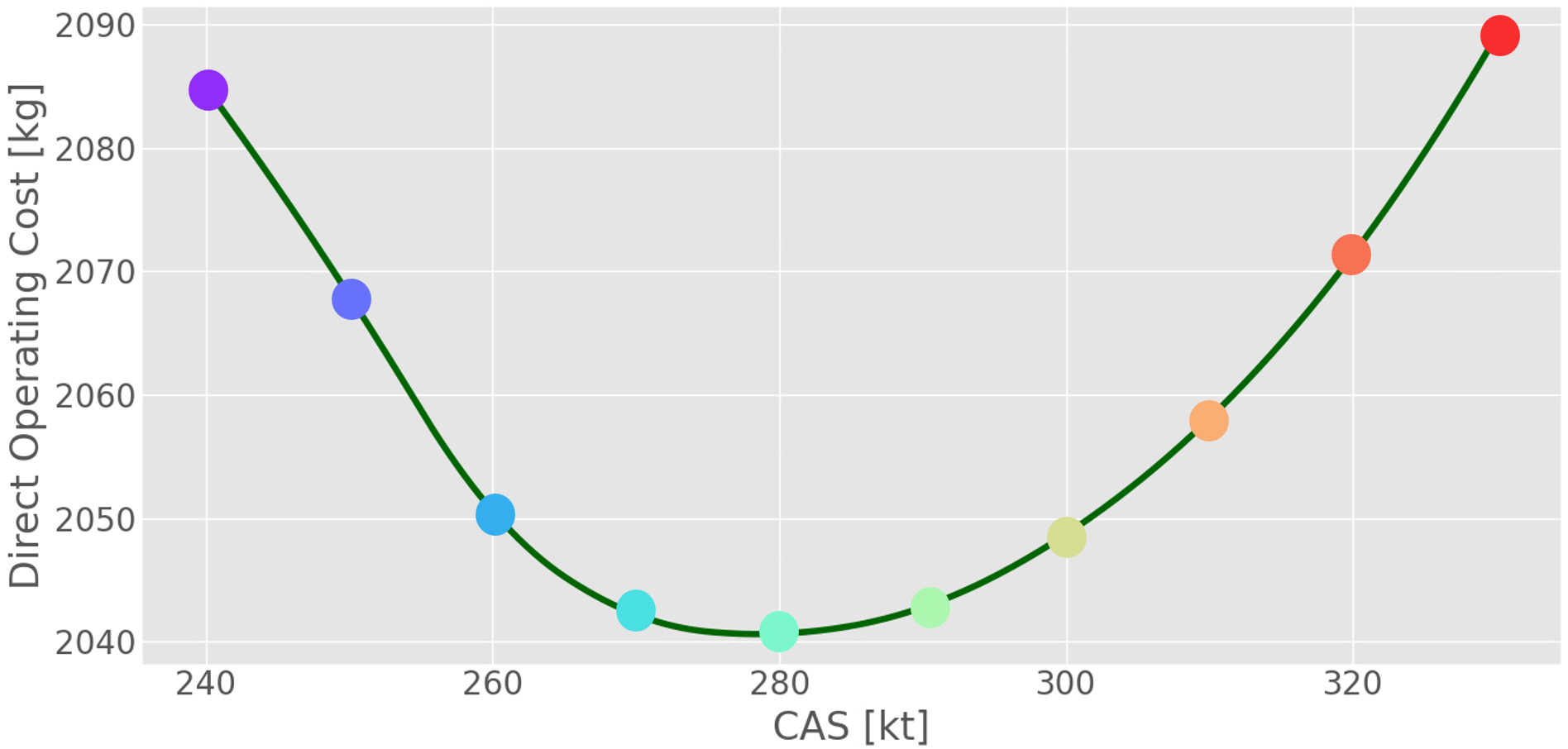
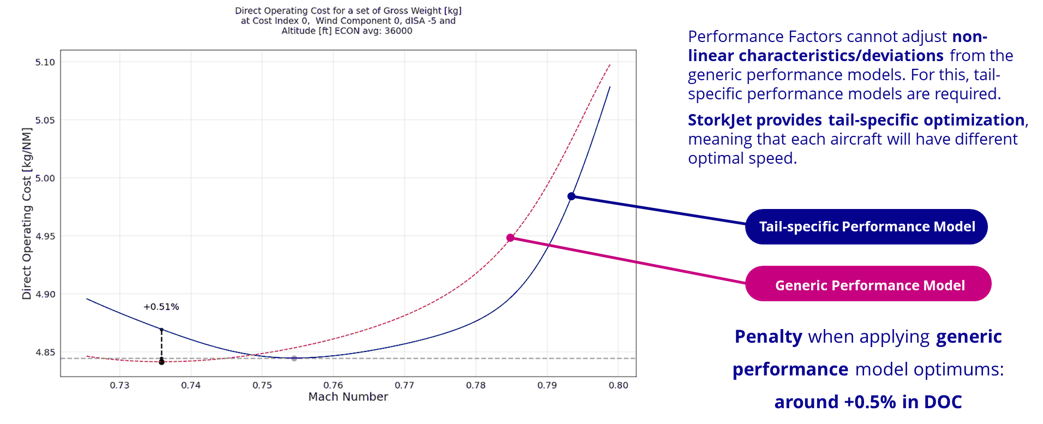
Generic performance models represent expected aircraft behavior, but every aircraft deteriorates differently over time and develops its own performance characteristics. Performance factors can correct some deviations, but they do not capture non-linear effects. For that, tail-specific performance modelling is required.
The objective is to identify the speed that minimizes DOC. The chart below illustrates why tail-specific models outperform the generic models provided by the manufacturer. The magenta line represents the generic model, which shows the lowest DOC at Mach 0.735. The tail-specific model produces a different curve rather than a simple horizontal or vertical shift, and in this example the minimum DOC occurs at Mach 0.755. Under these conditions, using the generic model creates a DOC penalty of 0.51%. With a cost index of 0, that penalty translates directly into additional fuel burn of approximately 0.5%.
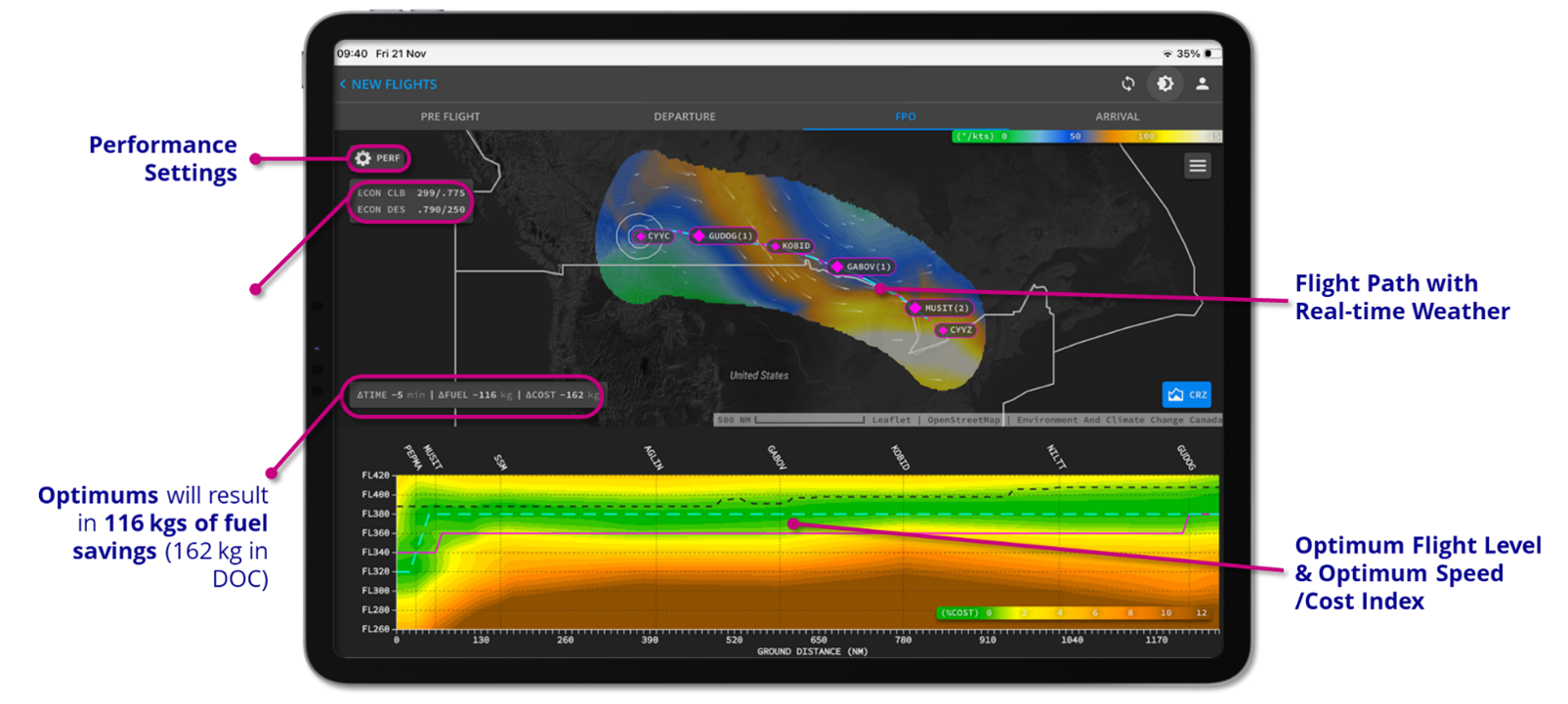
The figure below presents the main application view and its components.
Implementation Results
The example below shows how FlyGuide FPO helps pilots identify the most efficient vertical profile during cruise.
A representative flight from Alicante to Gdańsk illustrates the operational value. The core principle of Flight Path Optimization is to remain within the green area on the optimization chart. These green zones represent the most efficient operating region, while movement toward yellow and brown zones indicates a DOC penalty ranging from 2% to 12%.
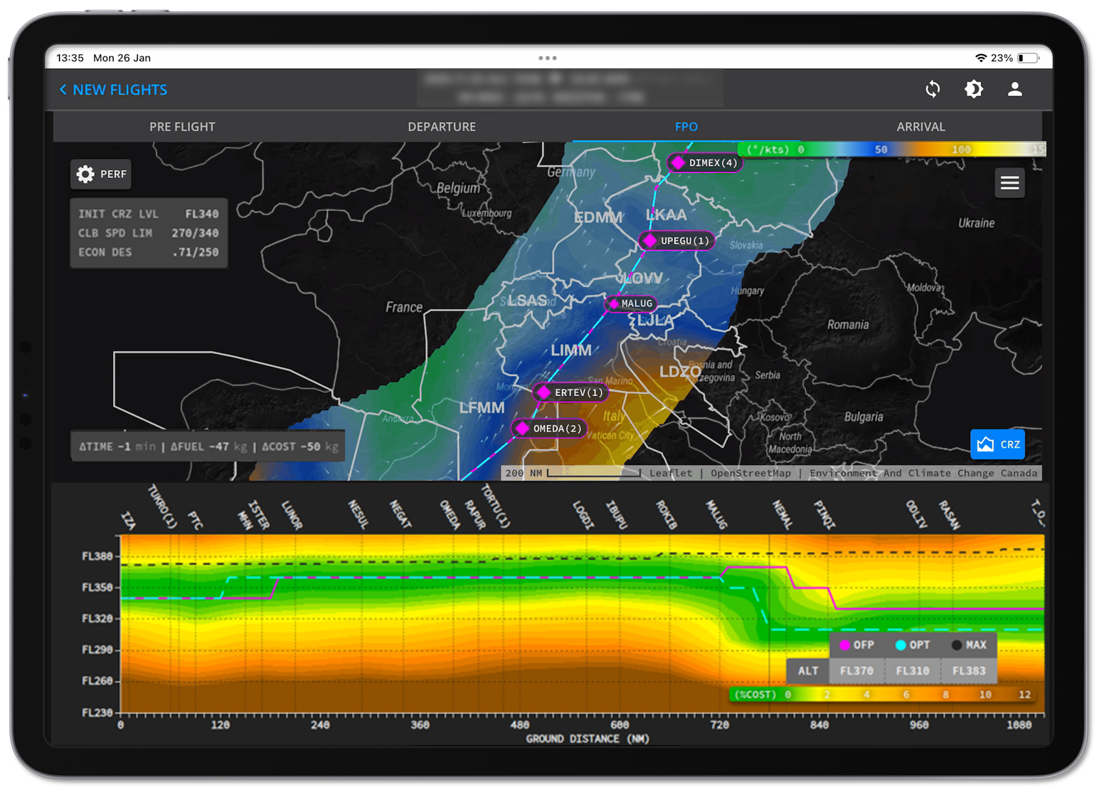
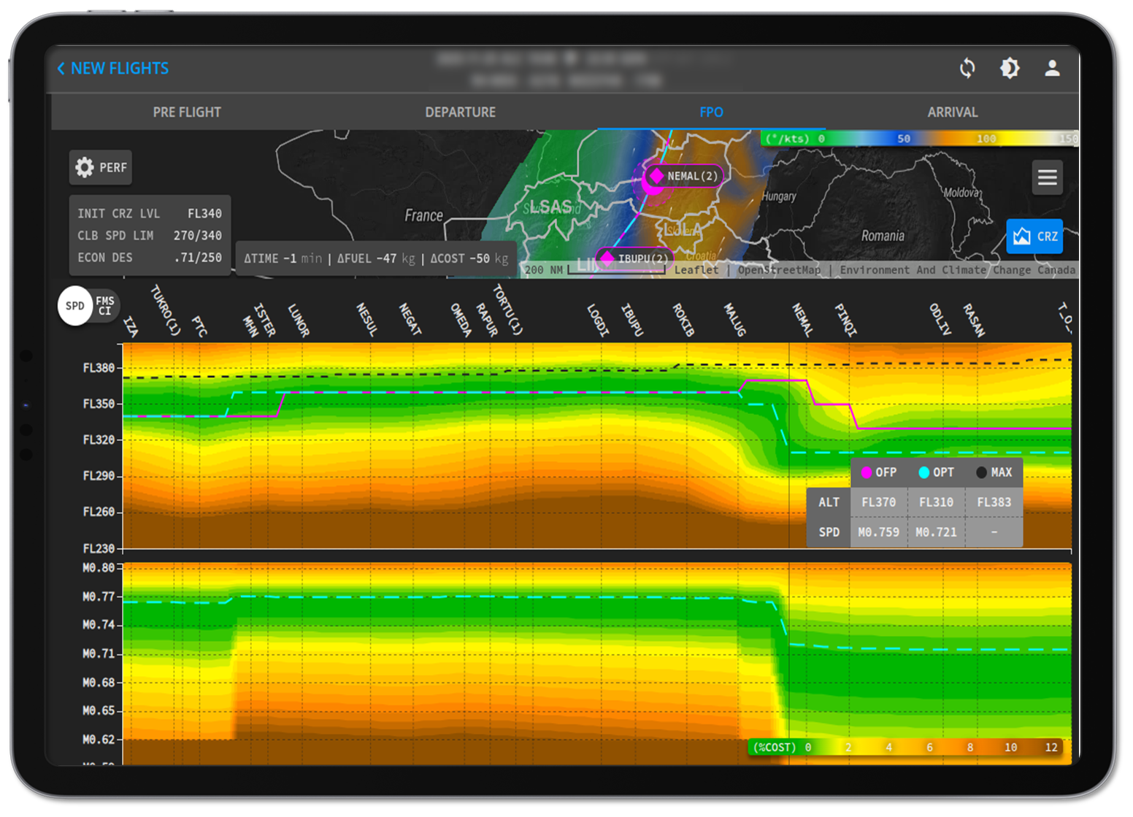
In this example, around 800 nautical miles into the route, FlyGuide FPO recommended a step descent. While the Operational Flight Plan (OFP) also indicated a descent, the recommendation was less pronounced: the OFP suggested FL330, while FlyGuide FPO recommended FL310.
According to the optimization map, part of the OFP-planned route would have entered the yellow zone, indicating a fuel penalty. The lower chart shows that both altitude and speed should be reduced to remain in the optimal region.
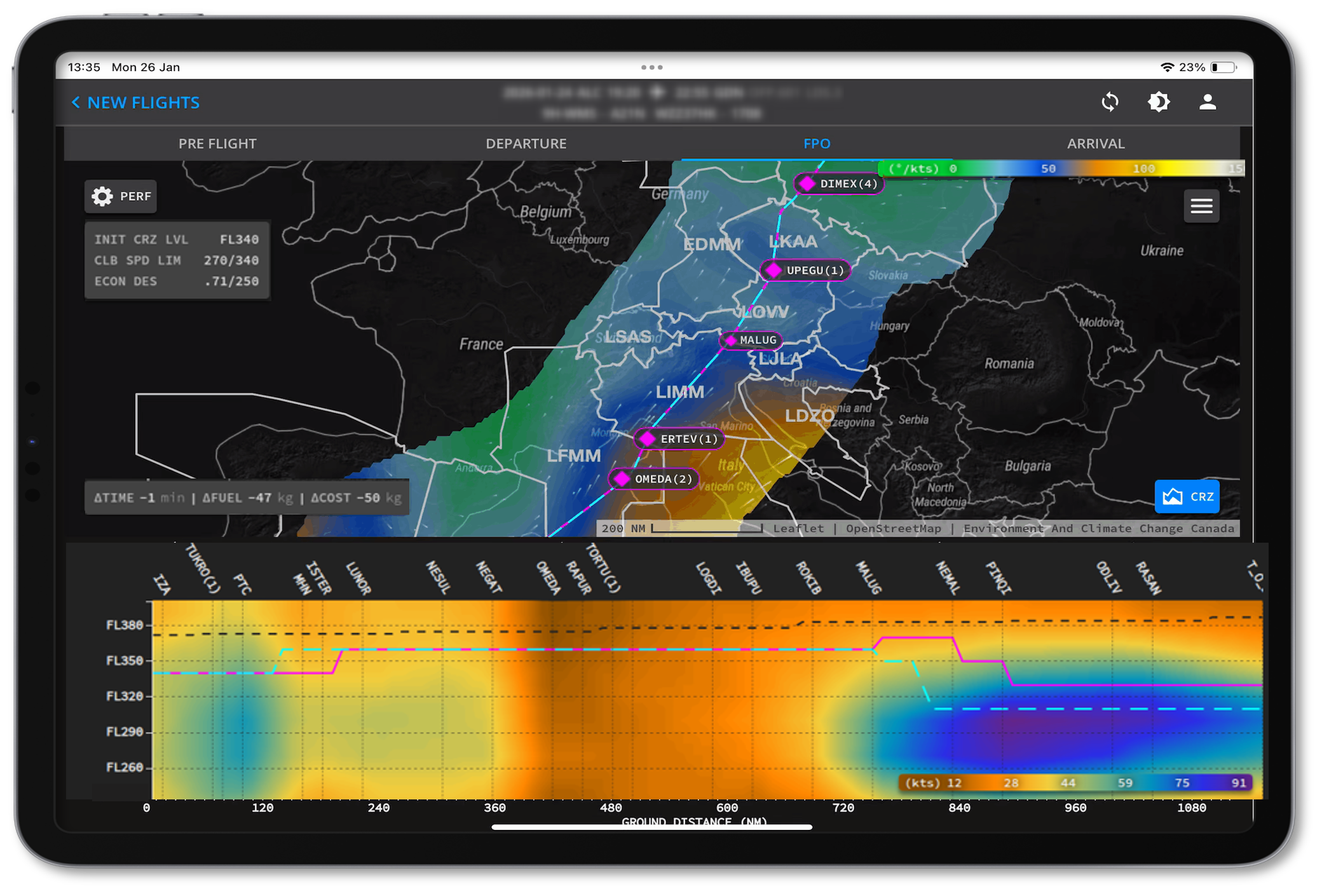
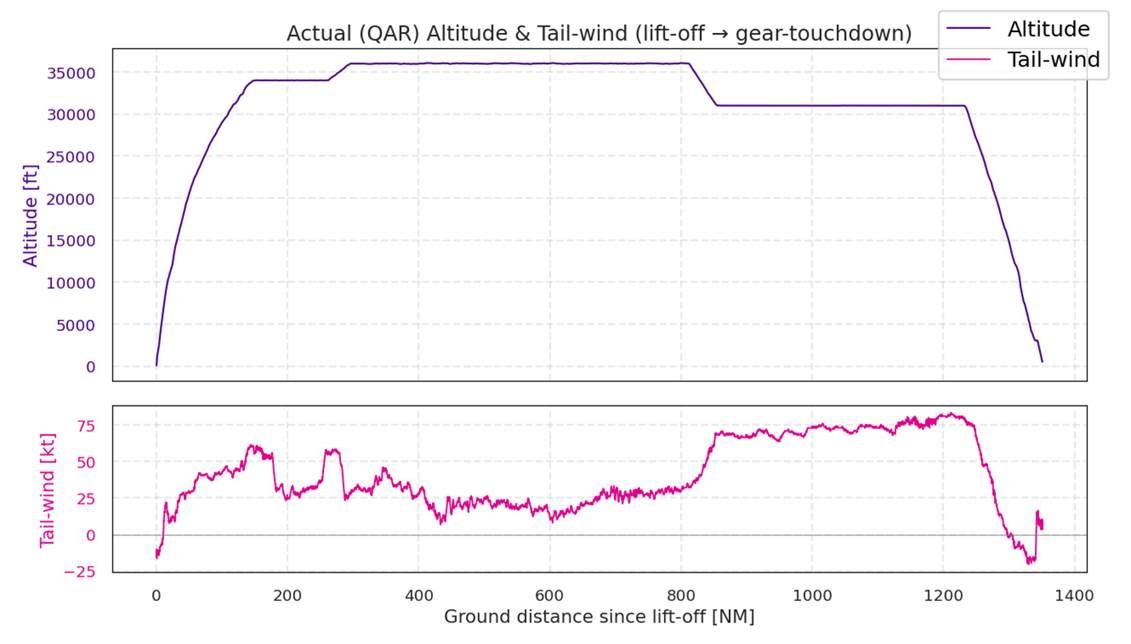
This recommendation was driven by the vertical wind profile. A significant tailwind of more than 70 kt was present at lower altitudes, making an earlier descent combined with a lower cruise speed more fuel-efficient.
For Wizz Air, it was important that pilots clearly understood the reason behind any deviation from the OFP. If ATC did not approve the step descent, the crew could remain at the OFP flight level. Even if the saving could not be realized, pilots still understood the operational logic behind the recommendation.
Post-flight analysis showed that this flight followed the FPO recommendations exactly. The full vertical profile from takeoff to touchdown included a step descent at approximately 800 nautical miles into the route, from FL360 to FL310. The chart below also shows the increase in tailwind to around 70 knots, as predicted by the weather forecast. 100% compliance with FPO resulted in savings of 1 minute of flight time, 47 kg of fuel, and 50 kg of DOC.
Pilot Adoption and Feedback
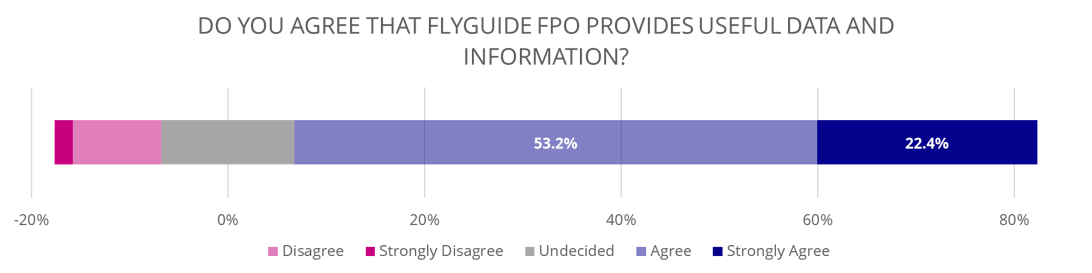
During the trial phase, Wizz Air optimized more than 10,000 flights using FlyGuide FPO. Following the business-case analysis, the airline also surveyed pilots to assess usability and operational value.
More than 75% of pilots[1] agreed that FlyGuide FPO provides useful data and information, with more than 22% strongly agreeing. The survey results provided further validation of the tool’s value in day-to-day operations.
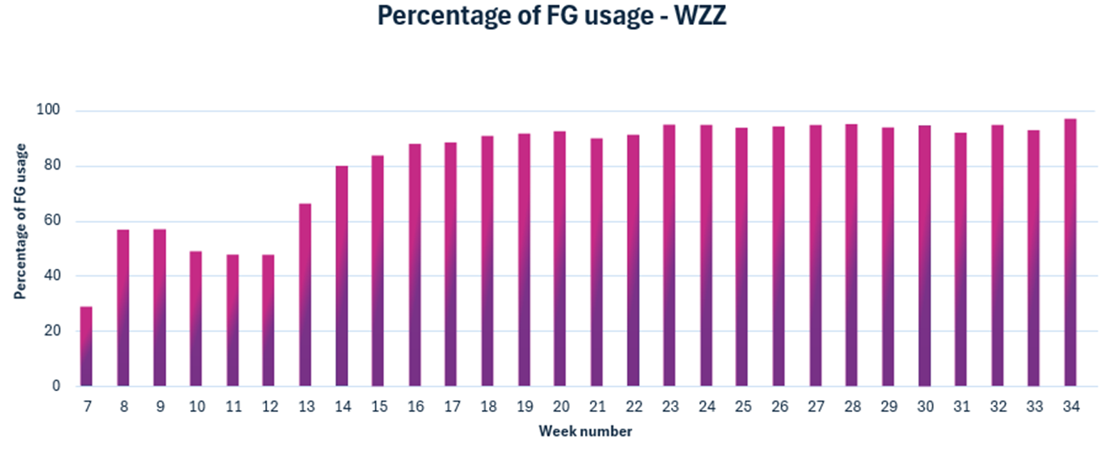
After the full airline-wide rollout, usage statistics showed that 92% of pilots use FlyGuide regularly:
Savings Analysis
To validate the savings, flights flown with FlyGuide FPO recommendations have been simulated using Digital Twin models and compared them with estimated flight costs under standard FMS speeds and altitudes.
Average DOC reduction was 15 kg per flight. In some cases, the savings were significantly higher, while in others no measurable savings were observed. This variation is expected, as savings depend on a large number of operational constraints and environmental variables.
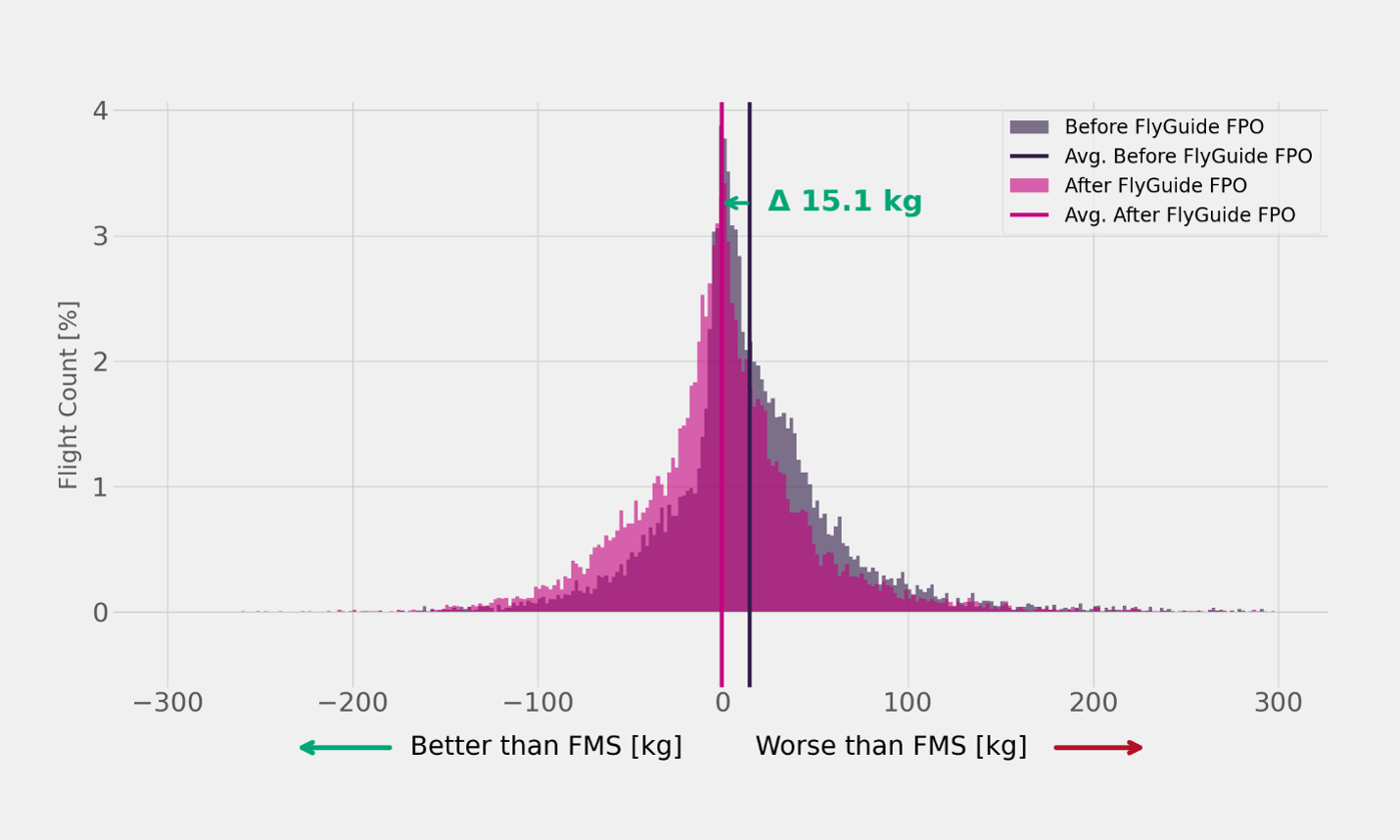
FlyGuide FPO enabled Wizz Air to unlock savings that were no longer achievable through FMS profile compliance alone.
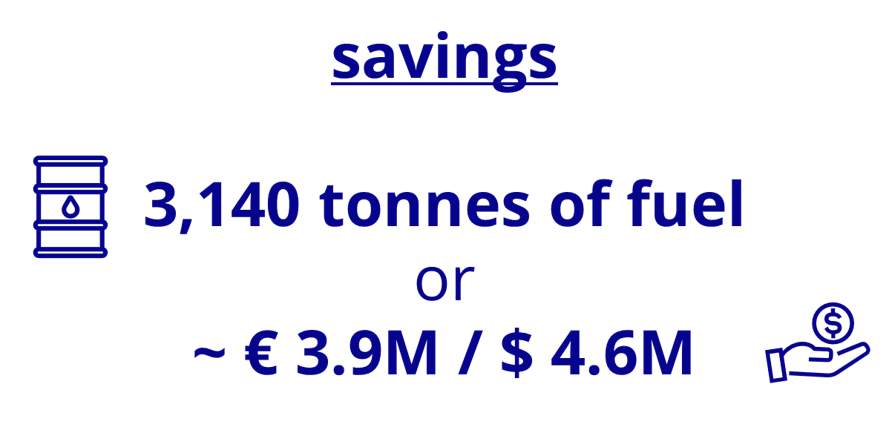
Total annual expected savings from FlyGuide FPO usage at Wizz Air amount to approximately 3,140 tones of fuel. At current jet fuel market prices[2], this would correspond to roughly € 3.9 or $ 4.6 million in fuel-cost savings, although actual realized savings depend on fuel purchasing conditions and hedging. The figure is an extrapolation of trial results to a full year of operations.
Conclusion
This case study shows that advanced flight path optimization can deliver meaningful additional efficiency gains even for airlines already operating with very high levels of FMS compliance and with other fuel-efficiency measures already in place, including initiatives delivered in partnership with the same provider. By combining tail-specific performance modelling, accurate weather data, and clear pilot guidance, FlyGuide FPO helped Wizz Air move beyond the limits of traditional FMS logic and achieve measurable operational and environmental benefits at scale.
[1] Survey answered by 143 pilots out of 576 who were given access to the application during the trial period.
[2] Market data as of April 2026
Contributor’s Details

Jaime Romero Waldhorn currently holds the position of Fuel Efficiency Manager at Wizz Air. He started his aviation career at the age of 18 with his commercial pilot training, which was then supplemented by completing a bachelor’s degree on Commercial Aviation Engineering. After spending 6 years in various operations-related positions at LATAM Airlines, he moved to Germany where he got a master’s degree in Traffic and Transport from the TU Darmstadt in 2019.
Since 2018 he has been part of Wizz Air, starting his current role in 2020, overseeing the introduction and the monitoring of fuel efficiency initiatives. With over fourteen years of experience in the airline industry, Jaime has made significant contributions to enhancing fuel efficiency and operational performance at Wizz Air.

Wizz Air operates a fleet of 262 Airbus A320 and A321 aircraft. A team of dedicated aviation professionals delivers superior service and very low fares, making Wizz Air the preferred choice of 62.8 million passengers in 2025. Wizz Air is listed on the London Stock Exchange under the ticker WIZZ. The company was named one of the world’s top ten safest airlines by airlineratings.com, the world’s only safety and product rating agency, and named Airline of the Year by Air Transport Awards in 2019 and in 2023. Wizz Air has also been recognized as the “Most Sustainable Low-Cost Airline” within the World Finance Sustainability Awards in 2021-2025 In 2026, Wizz Air received second place in the global airlines’ emissions ranking, as presented by Cirium, an aviation analytics company, thanks to its work reducing emissions intensity.

Fuel Efficiency and Aircraft Performance: Our passion, your savings
StorkJet provides IT solutions and consulting services that help airlines cut fuel costs, reduce emissions, and improve flight operations by turning flight data into actionable guidance. With StorkJet, carriers get equipped with precise tools for aircraft performance monitoring, fuel planning, pilot decision support across all flight phases, and post-flight feedback – thanks to combining machine learning, physics-based modeling, and big data analytics.
Airlines working with StorkJet gain a single partner for all fuel efficiency needs – flexible, data-driven, and focused on real operational goals. Trusted by the world’s leaders in sustainable aviation.


